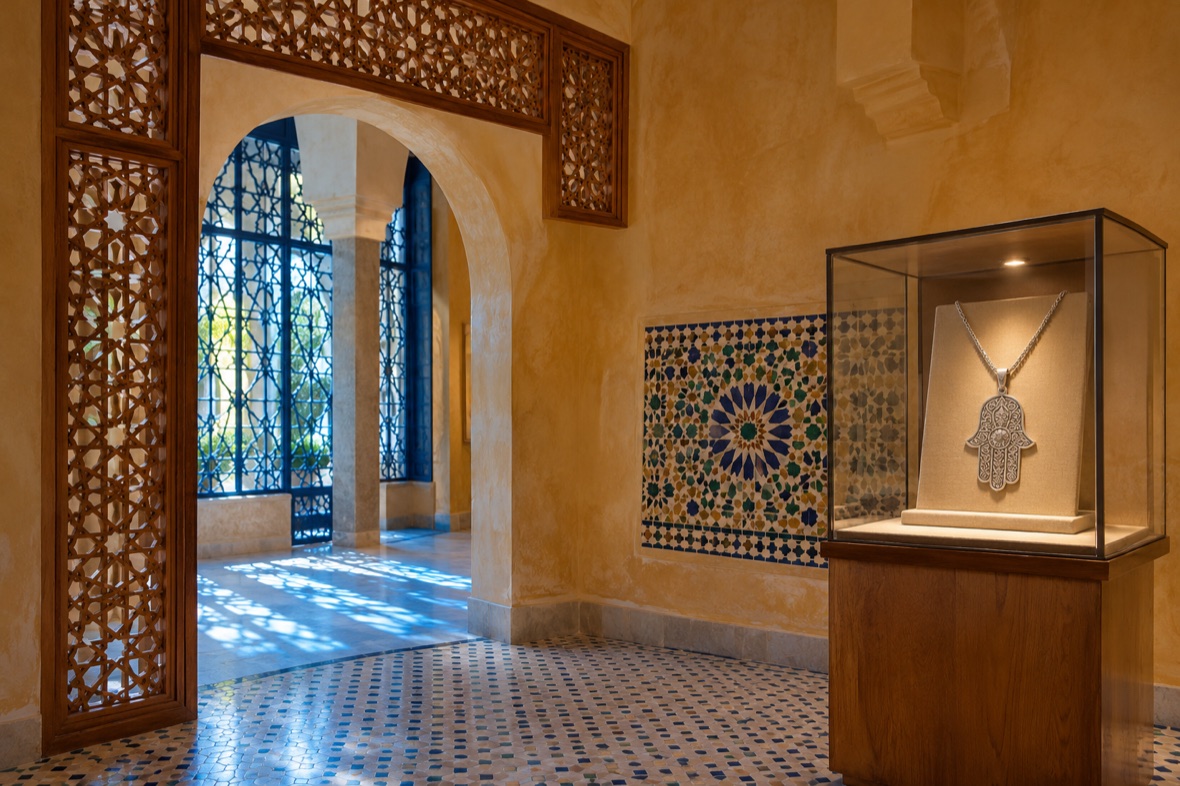
A Moroccan silver khamsa hand pendant, about the 1890s
Entering the space…
Arrows / WASD to walk · E to select a spot
Drag sideways to look around 360°. Drag up or down to tilt your view.
All pavilions
Visit points can be exchanged for virtual items and services.
Take a virtual coffee on your walk, or raise a cup to someone nearby.
One coffee · 4 points
Ride for a while, then return to a slower pace.
10-minute rental · 6 points
Watch the view. There is nothing you need to do.
Wave to someone in this space, raise a cup, or invite them to sit for a while.
Take your time here, or say hello to someone nearby.
Khamsa means five. The British Museum connects hand amulets in North Africa and the Middle East with hopes of protection from an envious gaze, noting that these examples may have been used by Muslims or Jews. The hand carries a protective meaning across community contexts.
The reference is a Moroccan silver pendant from around the 1890s, decorated with enamel and glass, accession 2014,6009.1. The museum also records the name Hand of Fatima. Its specific names, materials and possible users reveal several histories within a related form.
Pavilions are original exhibit designs. Object images are identified as museum photographs or display studies, with dates, materials and context in each source record.
The Hand and Its Histories · Visit card